
On Implementation: Closing the gap between laws and lives
How you implement will determine how policy is actually felt in people's lives

As we think about the recent elections and the policy shifts that they portend and the days and weeks of this federal government shutdown continue, we are all about to find out more clearly about the importance of the mechanics of policy implementation.
Implementation is what happens after the election is won, a bill is signed, after the press conference, after the champagne (or tequila) toast. It’s the moment when everyone involved in crafting policy often collectively exhales and moves on to the next fight.
But that’s not the end of the policymaking process- it is really only a different beginning.
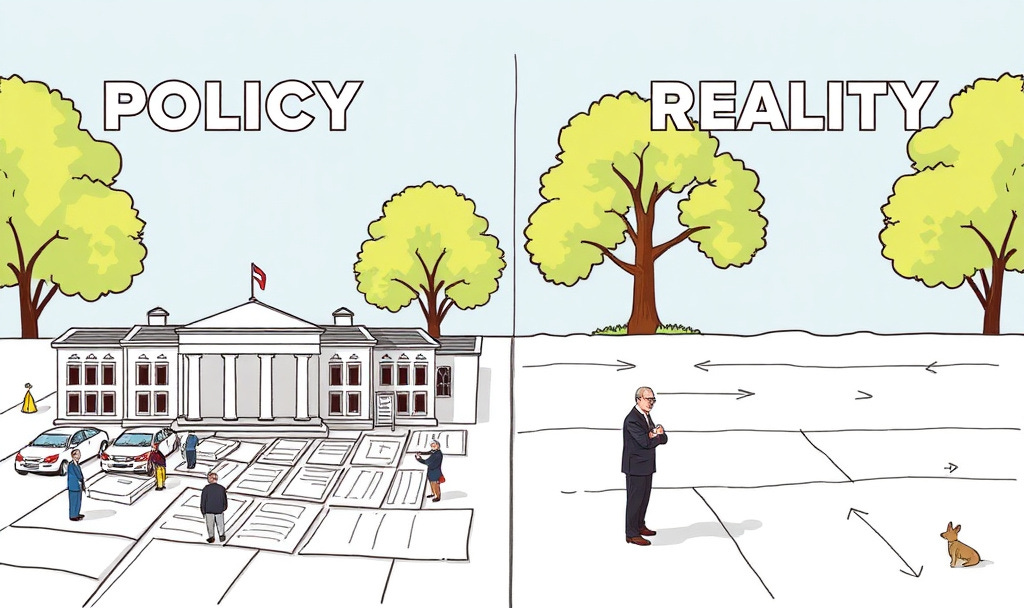
At the end of the day, a law that no one knows about might as well not exist. A benefit that’s too complicated to access might as well be a locked door. A policy that sounds good in committee, but can’t be implemented, is just expensive theater.
Those of us who aren’t completely craven lunatics are ostensibly in the business of policymaking because we want to make people’s lives better. We aren’t just in it for the confetti that drops at an election night watch party–we do this work because we want children to have healthy food, because we want seniors to be able to age with dignity, because we want people to live full lives of freedom from tyranny with work that is fairly compensated and not die of preventable diseases…and of course because we want the price of f’ing eggs to go down.
So, when we do the work of ‘politics’ or (for those like myself that like to think of themselves as further removed from the gamesmanship of crass politics) ‘policymaking’ we do it because we want people’s lives to be better.
The recent conversation with Ezra Klein and Ta-Nehisi Coates caused a lot of people to stop and think–why do we care about “winning” in politics? The reason should be because we care about people’s wellbeing. And if this is what we truly care about–improving lives–then we have to be just as concerned (if not moreso) about the implementation as we are about the policy.
Here’s what happens when we forget to care about implementation (storytime!) ….
When I was a young staffer working at the US Department of Education in February of 2009, one of my first assignments was to check on the implementation of a newly inked bill to provide student loan relief and forgiveness for those working in public service for 10 years. The law providing for lower payments and loan forgiveness for public servants had been passed in 2007 and was set to open for enrollment in 2009, but no publicity about this new potential benefit for borrowers had been done when I started my job.
Why was this important? Because for the FIRST TIME EVER, students en masse would be able to choose a repayment plan that drastically lowered their payments if they worked in lower paying jobs, and have those payments eliminated after 10 years of working in public service. The narrative that you had to take a higher paying corporate job because you needed it for repayment of student loans was no longer fundamentally true, especially for those who were interested in public service. But…someone needed to actually inform students of that reality and craft a process for them to feel secure in this guarantee. Ideally, the Department of Education would partner with colleges and other stakeholders to get the message out, so that students could make career choices informed by this new reality.
So, I searched to find the office and individuals responsible for implementation of the law. I trudged to their office to meet, and when I asked about what plans they had to share the word, or even to do something as simple as put a PDF on the Department of Education’s website explaining the new law, the response was… “Well, the first loan won’t be forgiven until 2017, so we figured we had plenty of time…” i.e. NOTHING had been done, no plans were in place, and no one had prioritized this task as important within the Department of Education’s workflow.
(Unfortunately, this lack of prepared implementation had real implications for the program’s takeup and impact.)
To be clear, I do not blame the individuals who I met with that day. I do blame a system that valorizes policy “wins” as laws being passed rather than people being helped. The royal “we” has to consider the resources and attention needed for the full implementation of policy, not just the advocacy needed to get a law passed. There is hard and necessary work in developing a beautifully complex and nuanced policy proposal, yes, but that work is for naught if no one ever knows about the benefits of the program.
Implementation is the part where we translate the law or the regulation into an actual real life action that makes someone’s life better. Implementation of policy occurs not on Capitol Hill or the Statehouse (though Governors and Mayors often have a greater ability to affect implementation)—implementation is crafted in the decisions about personnel, in the values and quality of leadership, and in the capacity provided to carry out a bold vision.
With that foundation in place, the nitty gritty of policy implementation occurs in the offices of obscure government employees — many of whom are currently not working due to the federal government shutdown. These are the people working jobs whose titles don’t make the papers, who often won’t become famous or have the next law named after them due to their tireless work, but whose work significantly impacts the experience that individuals have as a result of government policy. Their work is buttressed by leadership with a vision that inspires action, who provides clear guidance, and who is committed to providing the capacity needed to get the work done well.
My story is just one example of a law that wasn’t implemented as intended. I could share others, as well. There are many laws on the books that have not been implemented or whose implementation is severely hampered because the government lacks the capacity to do it well.
This is the gap we have to close: there is a huge chasm between policy writing and policy implementation. Closing that gap actually requires a sense of what ‘good’ looks like in practice, in VERY concrete terms. Not in policy-speak, but in the lived experience of the person who will use it. It’s amazing how many policy-shapers miss this simple point. It also requires a know-how about leadership and project management that is too often lacking in political leaders within our government agencies. (Perhaps another post for another day, but some initial thoughts here.)
I know how brutally hard it is to get policy ideas turned into law in the first place. I’ve been in those sausage-making sessions where good policy gets compromised, where clear language becomes murky, where simple implementation becomes complex. The deal-making process often produces policies that are genuinely difficult to communicate and implement.
But that’s exactly why we can’t stop at the signing ceremony. If the sausage-making made it messy, implementation has to untangle it to the best of our ability. A
Of course, the process is HARD. But this is the work to which we must be beholden, as policy-shapers—the work of figuring out the back end design and detail so that the front end communication and implementation is smooth.
So as we think about the system that we need to replace the one that is currently being destroyed, I hope we can consider not only the policies that will undergird that system, but also the infrastructure that is needed to help implement those policies with fidelity. That infrastructure includes leaders with experience in the areas they are tasked with managing and an understanding of and appreciation for the difficult task of leading and inspiring people with vision toward a shared goal. (This is the part where “personnel is policy” really hits home.)
Our job—whether we’re writing policy, advocating for it, or implementing it—is to close the gap between intention and reality. To be user experience designers with values as our guide. To remember that “wins” are measured in lives changed, not laws passed.
It’s harder work than we acknowledge. But it’s the work that matters.